The toy that creates people with OCD gardening syndrome - a Home Depot toy weed trimmer. It is only $9.98, and a great buy of plastic made in China, I bet. Give the kid a real metal shovel instead to dig up some thistle roots. Let kids do real things, and learn about the real outdoors. But maybe that is too much to hope for, when there are so many gadget-happy parents in the US.
Welcome to the wonderful world of weedy plants!
Weeds are superevolutionary products of human civilizations and activities - without humans there would be no weeds, just wild plants.
Wednesday, January 25, 2012
Product: Weed trimmer toy
The toy that creates people with OCD gardening syndrome - a Home Depot toy weed trimmer. It is only $9.98, and a great buy of plastic made in China, I bet. Give the kid a real metal shovel instead to dig up some thistle roots. Let kids do real things, and learn about the real outdoors. But maybe that is too much to hope for, when there are so many gadget-happy parents in the US.
Not all weeds are edible or even palatable...
Smokey The Cat tried out some leaves of the yellow foxtail (Setaria, Poaceae), but spat them out. When it comes to edible plants, it is important to remember that some things that are edible do not really taste good, and that some things that taste good actually are toxic. So, don't go by the taste only.
[photo by Vilseskogen, Flickr, Creative Commons]
How to identify weed species
To be able to identify plants to a certain species, you will need a good flora, a handlens, and a little patience while you learn the botanical terminology that describes plant features (stipules, petiole, sepals, and things like that).
Some plant groups are a lot harder to identify than others, like the Polygonum genus in the rhubarb family Polygonaceae for example (see photo above). For them you will have to look at tiny hairs and glands through the handlens, but for many others it is enough to compare the photos in a photo flora. It depends. But to be sure, then you need a book (flora) that includes all the species in our area and usually something to magnify the plant with.
If you find something that looks unusual, you can always press and dry it and show it to a botanist later for confirmation. A photo is often helpful, but many species you can't tell apart from photos.
[photo by Vilseskogen, Flickr, Creative Commons]
Labels:
botany,
field,
flora,
idenfication,
key,
microscopy,
preserving,
species,
weeds
Red berries mean bird-dispersal
When you see a plant with red, fleshy berries, then its fruits are most likely eaten and dispersed around by birds. Here is an example, the invasive species Amur honeysuckle (Lonicera mackii, Caprifoliaceae):
Birds are attracted to red, a color many other animals can't see, and since birds fly about, bird-dispersed plants are often widely spread, including to far away islands.
Keep in mind that about 50% of red fruits are toxic to humans, but not to birds, since their stomach acids are less strong, and their digestion works faster, so the toxins in the seeds are therefore not affecting the birds as strongly.
Do not eat any red berries if you aren't 100% sure what species it is. Unless you are a bird of course.
[photo by Vilseskogen, Flickr, Creative Commons]
Birds are attracted to red, a color many other animals can't see, and since birds fly about, bird-dispersed plants are often widely spread, including to far away islands.
Keep in mind that about 50% of red fruits are toxic to humans, but not to birds, since their stomach acids are less strong, and their digestion works faster, so the toxins in the seeds are therefore not affecting the birds as strongly.
Do not eat any red berries if you aren't 100% sure what species it is. Unless you are a bird of course.
[photo by Vilseskogen, Flickr, Creative Commons]
The salad is at your feet
Jane Kramer writes about her foraging adventures in Europe in The New Yorker article The Food at Our Feet. On the New York Times blog City Room, they have a series in Urban Foraging by Ava Chin, writing about purslane picked from the sidewalks of the city, and much more.
Species: purslane, Portulaca oleracea, Portulaceae
Abner Weed, founder of the town of Weed, CA, USA
The tiny lumber town of Weed in California got its name after Abner Weed, and they have a Weed Historic Museum (another link). Of course, the museum is not about weeds, but about the town, but I wonder how Abner Weed got his name in the first place.
If you do a search for the last name Weed on FamilySearch.org, a genealogy website, you get over 130,000 people named Weed. But the same person is listed several times, since Abner Weed has over 6000 hits, and many might be the same person listed several times.
He was born in Maine, moved to California, and the 1910 US Census list a rather mixed group of people in his household; his wife Rachel and himself, both 67, and 9 males of 18-35 years of age. None of them had his last name, but non-English names such as Yuck Wa Wong, Franz, Luigi Panzera, and Florence Rossi - I wonder if they were workers renting rooms from the Weed family.
Another entry in the 1910 census listed Abner and Rachel and two sons. And a third census entry, under his son's name, lists his father, and another giant row of mill workers.
Hard to keep track of all these Weeds for the census workers back then. So some research is needed to really figure out who lived with who...
[Image by Corey Denis, Flickr, Creative Commons license]
He was born in Maine, moved to California, and the 1910 US Census list a rather mixed group of people in his household; his wife Rachel and himself, both 67, and 9 males of 18-35 years of age. None of them had his last name, but non-English names such as Yuck Wa Wong, Franz, Luigi Panzera, and Florence Rossi - I wonder if they were workers renting rooms from the Weed family.
Another entry in the 1910 census listed Abner and Rachel and two sons. And a third census entry, under his son's name, lists his father, and another giant row of mill workers.
Hard to keep track of all these Weeds for the census workers back then. So some research is needed to really figure out who lived with who...
"In its early days, Weed was like other towns of the wild west. Weed acquired a bad reputation, which later was used to vilify it for many years. The Redding Free Press described Weed as the "Sodom and Gomorrah of Siskiyou County." That description was not without some justification. Whiskey, cards, a pocket full of money, or an empty pocket, and a beautiful woman occasioned many of the joys and also the tragic events of the town. Gun shot wounds and murder were occasional happenings." (source)The world's largest sawmill was here in the 1940s, says Wikipedia.
[Image by Corey Denis, Flickr, Creative Commons license]
Labels:
CA,
etymology,
geography,
history,
industrial,
museum,
naming,
people,
people names,
place names,
sign,
timber,
USA,
weeds
Climate change scenarios in New York State, what about the weeds?
From the 2011 report on the potential long-term effects of climate change in New York State (pdf here, very interesting read):
"Carbon dioxide fertilization tends to preferentially increase the growth rate of fast-growing species, which are often weeds and other invasives."
"Increased weed and pest pressure associated with longer growing seasons and warmer winters will be an increasingly important challenge."
Labels:
climate change,
NY,
report,
weeds
Iowa's old cocklebur farms
From an article in New York Times, about how the high crop prices are making farmers plow and put golfcourses and old, unused farmland into agriculture again:
In Iowa, the nation’s biggest producer of corn and soybeans, farmers insist that they are simply getting more value from their land. Darrell Coddington, a farmer who runs an excavation business, has spent much of the past year clearing additional land in the hilly and wooded southern part of the state, including places that used to be left alone and derided as a “cocklebur farm,” referring to the thorny weed.Cocklebur (Xanthium strumarium) is a very interesting-looking plant. It is in the Asteraceae, the sunflower family, but the fruits are covered with horrid, sharp spines (easy to get around if you are stuck to an animal!). It used to be the perfect food for the now extinct parrots of the South; now however, it is an invasive weed that loves rich and often sandy soil. It is a nasty thing to step on and is also toxic. Any good features? Sure, it makes a yellow dye and it repels pests from crop plants close to it.
Company named after weeds: Dandelion Corporation
Dandelion Corporation is an advertising company in Newport Beach, CA, USA has a homepage with a dandelion on it. 'Like dandelion fruits we want to spread our ads through the air', or something like that. They actually didn't say that, it is my interpretation on why you would want to pick Dandelion as your company profile. Millions of little downy parachutes sailing effortlessly through the air, spreading your marketing efforts. Here is the homepage, and I especially like the soil on the bottom.
Species: dandelion (Taraxacum officinale, Asteraceae)
Weeds in advertising: GM China
A giant field full of dandelion heads releasing their seeds in the wind, who would have thought of that as an ad for GM? Link to image and info: Print advertisement for GM China by Bates Advertising.
I guess GM wants the symbolism of all the green, as in green = good, or is it something about weeds spreading far and taking over?
(species: dandelion, Taraxacum officinale, Asteraceae)
I guess GM wants the symbolism of all the green, as in green = good, or is it something about weeds spreading far and taking over?
(species: dandelion, Taraxacum officinale, Asteraceae)
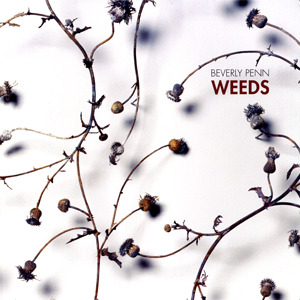
Sculpture art inspired by weeds: Beverly Penn
From dusty, dry Texas roads (I imagine), artist and art professor Beverly Penn gathers weeds and uses them as inspiration for her exquisite metal sculptures.
The statement for her 2006 show puts both weeds and society in perspective:
"At least since the advent of agriculture in the Neolithic Age, humans have been attempting to control and improve nature, a process that increased in magnitude and momentum during the industrial period. We created machines that are quicker and stronger than we are, and modes of transportation, communication and building construction that are ever more rapid and more predictable. In the wall-hung sculptures that comprise Weeds, artist Beverly Penn addresses the sacrifices that accompany these capabilities, such as escalating energy emissions, disappearing forests, and compromised personal privacy and identity."
[source]
More of her works at Lisa Sette Gallery. There are several plant species used in her work, at least thistles (Cirsium?, Asteraceae) and knapweed (Centaurea, Asteraceae), but also others. I would have to look at them closer to be able to guess better.
Weed whackers and the nature of weeds
'Coal and Ice' (Seamus) on Flickr took this great photo of weed removal tools, and also wrote a long and insightful piece as part of the photo description. Head over to Flickr and read it here.
Do you know all the tools? There is a scythe, string trimmer, Ryobi, grass whip, clippers, Fux, weed cutter, corn knife... Coal and Ice has it all explained in his post on Flickr.
[Photo (c) Coal and Ice, Flickr]
Species: Yarrow and nosebleeds
The weed yarrow is a native here in the US, but it is also present in Asia and Europe. It has been used medicinally for a long time. Its botanical name, Achillea millefolium (Asteraceae), is of course after the Greek god Achilles, and millefolium after a 'thousand leaves' since the leaves are so finely dissected.
When I was a kid in Sweden, they told us stories how in the old times, school kids would take a piece of the leaves, which have sharp tips on each little leaflet, and put it in their nostrils before a boring class at school. A while in during the lesson, the kid would just slightly touch its nose, and a profuse nosebleed would start, and wow, the kids got immediately excused from class.
Yarrow is also cultivated here in the US, so it is one of those weeds that the horticulturalists can't really decide if it is good or bad. Maybe it is just an interesting plant?
Species: Yarrow (Achillea millefolium, Asteraceae)
[Image from Lindman's Bilder ur Nordens Flora (Swedish), public domain]
Species: Indian Balsam
This gorgeous flowering plant, up to 3 m tall, is an invasive wetland and wet soil weed in Sweden.
It is native to India and was first found in Stockholm harbor in 1928, and now it is common in many parts of southern and central Sweden, especially around Stockholm. This photo is from an area north of Stockholm, in Gävle near the Baltic Coast.
The fruits are impatient, thereby the genus name Impatiens. When you touch the mature fruit it explodes in your hand (video here) and the seeds are shot away to new places for new plants to grow. But the flowers of this invasive are gorgeous, dark pink and orchid like.
Species: Indian balsam, Impatiens glandulifera (Balsaminaceae)
[photo credit: Vilseskogen on Flickr, Creative Commons licensing]
Monday, December 19, 2011
Recent weed-related articles in the media
Jane Kramer writes about her foraging adventures in Europe in The New Yorker article The Food at Our Feet. On the New York Times blog City Room, they have a series in Urban Foraging by Ava Chin, writing about purslane picked from the sidewalks of the city, and much more.
Ecologists have started to argue scientifically about if alien species are necessarily bad or not. It started with an article in Nature (subscription only, so no link, but find it by googling 'doi:10.1038/474153a') by Mark Davis and 18 other ecologists. This led to a bumper crop of protest letters from many other ecologists (see the issues afterwards in Nature), and it entered the popular media too. Here is a podcast from Radio Australia about it.
In an article in TIME magazine, Bryan Walsh ponders if 'In a Globalized World, Are Invasive Species a Thing of the Past?'
Wired adds to the pile, with 'Sometimes Invasive Species are Good'. Wired goes on to describe 9 invasive species worth admiring, including the dandelion weed.
Ecologists have started to argue scientifically about if alien species are necessarily bad or not. It started with an article in Nature (subscription only, so no link, but find it by googling 'doi:10.1038/474153a') by Mark Davis and 18 other ecologists. This led to a bumper crop of protest letters from many other ecologists (see the issues afterwards in Nature), and it entered the popular media too. Here is a podcast from Radio Australia about it.
In an article in TIME magazine, Bryan Walsh ponders if 'In a Globalized World, Are Invasive Species a Thing of the Past?'
Wired adds to the pile, with 'Sometimes Invasive Species are Good'. Wired goes on to describe 9 invasive species worth admiring, including the dandelion weed.
Sunday, December 18, 2011
Local Flowers for $7.41 per branch!
The only problem here is that the local flowers are the invasive species Oriental bittersweet, Celastrus orbiculatus, which we rather get rid of. I bet the florist didn't know this. But this is a great use for an alien, invasive weed, don't you think? And to have some people pay over $7 for a branch of unwanted stuff, that is pretty good too. Of course most of them could have gone to any nearby place and cut this down themselves, since this species is omnipresent, fortunately.
Wednesday, December 7, 2011
Species: Mile-a-Minute weed
Mile-a-Minute weed, Polygonum perfoliatum / Persicaria perfoliata, Polygonaceae, a photo by Vilseskogen on Flickr.
(Polygonum perfoliatum = Persicaria perfoliata, Polygonaceae)
Monday, December 5, 2011
What agriculture really is about...
Farms are captive breeding facilities for evolutionarily unfit plants.
- Ari Novy
Monday, October 17, 2011
Pooh got it right
"Weeds are flowers too, once you get to know them." - A.A. Milne
Friday, October 7, 2011
Some more weed quotes
Our attitude towards plants is a singularly narrow one. If we see any immediate utility in a plant we foster it. If for any reason we find its presence undesirable or merely a matter of indifference, we may condemn it to destruction forthwith.
Rachel Carson
What would become of the garden if the gardener treated all the weeds and slugs and birds and trespassers as he would like to be treated, if he were in their place?
Thomas Henry Huxley
One is tempted to say that the most human plants, after all, are the weeds.
John Burroughs, Pepacton, 1881
"And so it criticized each flower,
This supercilious seed;
Until it woke one summer hour,
And found itself a weed."
Mildred Howells, The Different Seed
A good garden may have some weeds.
Proverb
Weeds are nature's graffiti.
Janice Maeditere
Weeds Never Die.
Danish Proverb
Rachel Carson
What would become of the garden if the gardener treated all the weeds and slugs and birds and trespassers as he would like to be treated, if he were in their place?
Thomas Henry Huxley
One is tempted to say that the most human plants, after all, are the weeds.
John Burroughs, Pepacton, 1881
"And so it criticized each flower,
This supercilious seed;
Until it woke one summer hour,
And found itself a weed."
Mildred Howells, The Different Seed
A good garden may have some weeds.
Proverb
Weeds are nature's graffiti.
Janice Maeditere
Weeds Never Die.
Danish Proverb
Subscribe to:
Posts (Atom)